Search This Blog

Tuesday, 8 March 2016

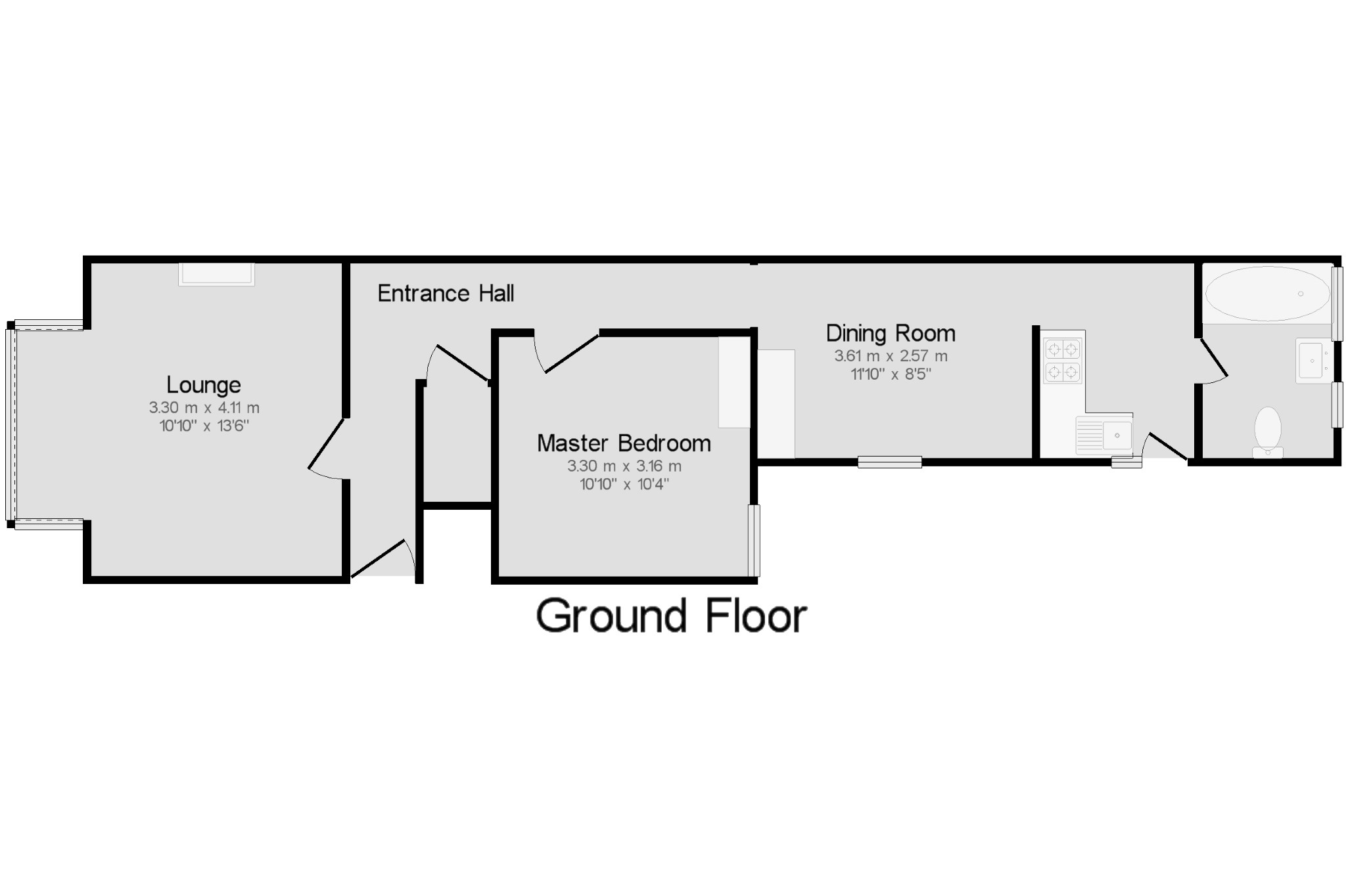
Lovely 1 bed maisonette yields 6%, yours for £135k

This is a great ground floor 1 bed maisonette in a good location between Hill Lane and Shirley Rd. You have the use of the back garden and while there is no off road parking there is sufficient parking by permit on street. The unit will let well at £675 pcm to a professional tenant. Gross yield is good at 6% based on asking price of £135k, but I would hurry it wont be around for long!! full details can be found at http://www.zoopla.co.uk/for-sale/details/39681586#cepwX7dLRF2mIMyb.97

Monday, 7 March 2016

Renters must earn over national average to be able to buy


The gap between average incomes and the pay of tenants who want to buy their first property has reached a post-recession high.
Analysis of data from the Office of National Statistics and the Council for Mortgage Lenders shows that the average income to support a first time buyer mortgage is £38,977 - that’s £11,332 higher than the average UK salary of £27,645.  
This is the widest gap there has been since the recession, signalling how access to home-ownership in the UK has become increasingly exclusive – and indicating why the lettings sector is likely to grow in the future.
The income gap has grown considerably in recent years in response to tighter lending criteria and rising house prices, making it harder to get onto the property ladder and blocking many from home-ownership without support from a partner, family member or government scheme.
In comparison, the gap between the average salary to support a first time buyer mortgage and the average UK salary was just £3,170 in 2000 and £7,505 in 2011.

In London the average salary supporting first time buyer loans is almost £58,500 or 65% more than the UK average. 
Compared with regional salary growth of just 1.3%, London has seen first time buyer incomes rise by 19.4%.
This means that the first time buyer to average income gap in London equates to £23,142, more than double the UK average of £11,332. It is also 3.9 times more than in Yorkshire, where first time buyer to average income has the smallest gap. This again highlights the massive difference between the haves and have-nots.

The research was conducted for mortgage insurer Genworth.

House prices increase by 9.7% in the year to February 2016


Last week we saw the publication of the latest Halifax House Price Index. As usual it sheds some interesting light on the housing market. Its main findings are:


  • House prices in the 3 months to February 2016 were 9.7% higher then in the same 3 months a year earlier.
  • House prices in the last 3 months were 3% higher then in the preceding three months.
  • House prices decreased by 1.4% between January and February. This offset much of January's 1.7% rise.
  • Increase in areas where homes have risen more in value than owners total earnings.
  • Home sales remain on an upward trend - 9.3% higher then 12 months ago.
  • Mortgage approval higher. 5% increase in approvals between December and January, now stand at 74,600 approvals, which is the highest level since January 2014.
  • House supply remains low but showing signs of slight improvement.
  • Number of new homes built increased by 7% between Q3 and Q4 2015. Overall completions were 20% higher in 2015 than 2014 and are at their highest annual level since 2008.

Will changes to the immigration bill protect Southampton's landlords?


Landlords will no longer be immediately criminalised for failing to pick up illegal tenants, according to the Residential Landlords Association (RLA).
The landlord body has been campaigning for changes to the government's Right To Rent legislation and says the government has now agreed to changes to the immigration bill which will provide protection for landlords who take reasonable steps in an appropriate time frame to terminate tenancies of tenants in the country illegally. 
 
Previously under the bill, landlords would face immediate criminal sanctions upon discovery that they failed to ensure their tenants had the right to rent property in the UK.
 
The Government has also agreed to look at changes to regulations to enable landlords to provide information such as tenancy deposit schemes to tenants via email instead of in paper form as currently is required.

Speaking for landlords, the Residential Landlords Association (RLA) has campaigned for both changes and very much welcomes the Government’s proposals.
 
RLA chairman Alan Ward said: “The RLA warmly welcomes the Government’s pragmatic changes to its right to rent scheme that will provide protection for good landlords from the unintended consequences of the policy.
 
“It is also welcome that the Government is willing to look at how electronic information can be better used to provide tenants with the legal information they require. In the 21st Century it is ridiculous that landlords are expected to print so much paper when it can be provided at the simple click of the button.”

Are Southampton retirees raiding their pensions for buy 2 let?


Downsizing has fallen out of favour with older homeowners, with more and more purchasing their dream retirement property and then renting it out until they are ready to move in.
According to research released today by Prudential, 20 per cent of over-55s would consider making a buy to let investment with the intention of living in it themselves one day, while a third (32 per cent) of those who already have a buy to let property are thinking about moving into it sometime in the future.
However, when asked how they intended to fund their purchase, around half (52 per cent) said they would take a lump sum from their pension.
"The advent of older people opting to buy-to-let-to-retire is an interesting development, and in a post-pension freedoms world its appeal is understandable," said Stan Russell, a retirement expert at Prudential. "However, there are a number of risks involved for anyone looking to take money from their pension savings, irrespective of the reasons."
Since the pension freedoms came into force last April, those aged 55 or over are able to withdraw money from their pensions pot without first purchasing an annuity.
Russell continued: "The simplest approach for most people looking to give themselves choices and secure their ideal home when they retire is to save as much as possible into a pension as early as possible in their working life."
From 1 April this year, an additional three per cent will be charged on stamp duty land tax (SDLT) for those purchasing a buy to let property. The new charge was announced in last November's Autumn Statement.

Government launched a consultation into the new higher rate of SDLT in December last year and is currently analysing the feedback it received.

Friday, 19 February 2016

HMO failings cost Notting Hill property company £47,900

A west London property company managing an HMO in Notting Hill has been fined £47,900 in relation to 24 charges under the Housing Act 2004 after council officers found numerous breaches of regulations ranging from a faulty smoke detector to unsafe banisters.
 
AAA London Property Limited of 37 Warren Street London W1T entered guilty pleas to 13 of the charges at an earlier hearing and was subsequently found guilty of the remaining 11 charges after trial.
The company’s director, Jagjit Kaur, who lives in the US, was fined £21,870 in relation to 16 charges under the Housing Act 2004. Kaur had entered guilty pleas to nine of the charges at an earlier hearing and she was subsequently found guilty of the remaining seven charges after trial which was heard by City of London Magistrates' Court on 12 February.
AAA London Property Limited and Jagjit Kaur were prosecuted by the Royal Borough of Kensington and Chelsea in relation to offences at 14-16 Clanricarde Gardens, W2. 
Both were charged with failing to comply with a Prohibiton Order made under the Housing Act 2004 prohibiting the use of one of the rooms as living accommodation, breaches of the Management of Houses in Multiple Occupation (England) Regulations 2006 and failure to produce tenancy agreements under section 235 of the Housing Act 2004.
Both the company and Kaur disputed the need to provide tenancy agreements to the council citing that they would be in breach of the Data Protection Act. They also disputed that a sink in one of the rooms was blocked on the day a council officer visited and that the smoke alarms were incorrectly installed. Kaur’s defence argued that someone else was managing the property.

Magistrates heard that 14-16 Clanricarde Gardens is a six-storey HMO that had been converted into 35 lettings, in which approximately 45 tenants lived. However, the council produced a copy of the HMO application form which confirmed that AAA London Property Limited was the licence holder and Kaur the manager with responsibility.
The court took into account the early guilty pleas by AAA London Property Limited and Kaur, as well as their good character. Accordingly, the magistrates imposed a reduction to the financial penalty in relation to those specific charges.
Cllr Rock Feilding-Mellen, the Royal Borough of Kensington and Chelsea’s cabinet member for housing said: “Councils have a duty to ensure that licensed HMOs are fit for the number of occupiers. The purpose of the licensing requirements is to enable local authorities to ensure that HMOs are safe, have adequate facilities for the occupiers and are properly managed.
“It is very important that, when faced with landlords who are not adhering to the appropriate regulations and licensing conditions, we take all necessary action to ensure that tenants are protected and that the properties they live in meet all legal requirements. In this case both the company and its director failed to meet the minimum standards and their responsibilities as a landlord so I am very pleased that the court has handed down these fines.”
As well as being fined, AAA London Property Limited and Kaur were ordered to pay the council’s costs of £7,709.75 and both had to pay a victim surcharge of £120.


Has Southampton experienced a growth in Home Ownership?


The English Housing Survey is a national survey of people's housing circumstances and the condition and energy efficiency of housing in England. In its current form, it was first run in 2008-09. Prior to then, the survey was run as two standalone surveys: the English House Condition Survey and the Survey of English Housing. This report provides the findings from the 2014-15 survey which was released recently and its main findings are:

After a period of recent decline, the fall in owner occupation appears to have abated.

· Of the estimated 22.5 million households in England in 2014-15, 14.3 million or 64% were owner occupiers. The proportion of all households in owner occupation increased steadily from the 1980s to 2003 when it reached a peak of 71%. A period of gradual decline in owner occupation followed but this seems to have abated with no change in owner occupation rates between 2013-14 and 2014-15. 

Among owner occupiers, the proportion of households who owned outright remained larger than the proportion buying with a mortgage, although not in London.

· In 2014-15, there were more outright owners (33%) than ‘mortgagors’ (30%), a continuation of the trend first identified in 2013-14. This was not the case in London where there were more mortgagors (27%) than outright owners (23%), most likely as a result of the younger age profile of the population in London. 

The private rented sector remained larger than the social rented sector.

· In 2014-15, 19% (4.3 million) of households were renting privately, while 17% (3.9 million) of households lived in the social rented sector. There was no change in the size of either sector between 2013-14 and 2014-15. 

There has been an increase in the number of families with dependent children in the private rented sector.

· Over the last 10 years, the proportion of households in the private rented sector with dependent children increased from 30% in 2004-05 to 37% in 2014-15. With considerable growth in the overall number of private renters over this period, this seven percentage point increase equates to about 912,000 more households with children in the private rented sector.

Over the last decade the average age of first time buyers increased.

· In 2014-15, the average age of first time buyers was 33, up from 31 in 2004-05. 

Younger people (aged 25-34) are more likely to rent privately than to be buying with a mortgage.

· Over the last 10 years there has been a significant increase in the proportion of younger households in the private rented sector. In 2004-05, 24% of those aged 25-34 lived in the private rented sector. By 2014-15 this had increased to 46%. Over the same period, the proportion of 25-34 year olds buying with a mortgage decreased from 54% to 34%. In other words, younger households aged 25-34 are more likely to be renting privately than buying their own home, a continuation of a trend first identified in 2012-13. Over the same 10-year period, rates of younger households in the social rented sector remained stable. 

The proportion of private renters who expect to buy has declined. No such decline was observed among social renters.

· In 2014-15, 57% of private renters and 24% of social renters stated that they expected to buy a property at some point in the future.

· Between 2013-14 and 2014-15, there was a decline in the proportion of private renters who expected to buy (from 61% to 57%). There was no such decline in the proportion of social renters who expected to buy. 

The proportion of social renters who expect to buy their current home has increased.

· Among social renters who expected to buy, half (52%) of local authority tenants and a third (35%) of housing association tenants expected to buy their current home.

· The overall proportion of social tenants who expected to buy their current home increased from 35% in 2010-11 to 42% in 2014-15. This may, in part be explained by the reinvigoration of the Right to Buy scheme which allows local authority tenants to buy their home at a discount. As the Right to Buy scheme is extended to include housing association tenants we may expect to see a further increase in the overall proportion of social tenants who expect to buy their current home in future waves of the English Housing Survey. 

While social rents increased between 2013-14 and 2014-15, private rents remained stable. Although this was not the case in London.

· In 2014-15, the average (mean) rent (excluding services but including Housing Benefit) for households in the social sector was £99 compared with £179 per week in the private rented sector.

· For social renters, average rents increased between 2013-14 and 2014- 15, from £94 to £99. Average private rents were unchanged.

· While private rents did not increase between 2013-14 and 2014-15 at the national level, in London there was a £17 per week increase, from an average of £281 per week to £298 per week. 4 | English Housing Survey Headline Report 2014-15 

The proportion of working private renters in receipt of Housing Benefit increased.


· Between 2013-14 and 2014-15, the proportion of non-working private renters on Housing Benefit declined from 57% to 49% while the proportion of private renters in work and on Housing Benefit increased from 14% to 18%. No such pattern was observed among social renters.