Search This Blog

Wednesday, 5 January 2022

The 7 Things Southampton Home Sellers Should (and Shouldn’t) Do in 2022


Did you know 10,910 Southampton homeowners are considering selling their Southampton home between now and the summer of 2023?

Reports in the press suggest 1 in 5 homeowners are considering moving home in the next 18 months.

This will change the dynamics of selling your home in Southampton, meaning there are certain matters that you, as a Southampton homeowner, should do before placing your property on the market to ensure you get the best price, reduce the hassle and even more importantly, when you do sell, ensure the move actually takes place. Why is this important?


1 in 3 Southampton house sales fall through between sale agreed and the keys being handed over


Also, nationally, the average length of time a property is taking from sale agreed to key hand-over is 19 weeks ... and the longer the sale takes, the greater the propensity for the sale to fall through.

So, if you are thinking of selling your Southampton home, here are 7 things you should consider (plus some tips for those Southampton homeowners currently on the market)…


1.    Get your ducks in a row

Although it may seem apparent, having everything in place for the time you come onto the Southampton housing market can really take weeks off the time between sale agreed and key handover and even avert the house sale collapsing. 

For example, if you have had any building works done on your house, ensure you have the relevant paperwork now. That could be ensuring you have the Completion Certificate from the local authority for that extension you had a few years ago. Yes, you had planning permission, but are you aware you need a Completion Certificate from Southampton City Council as well?

If you haven’t got the required building regulations or planning consent for any work (including changing your windows), that can really harm the price you achieve for your Southampton home, or it could even finish the deal altogether.

Also, if your Southampton home is old (say 150 years plus) or even listed, you should think about spending a few hundred pounds and get a survey done on your own house, especially if you have been in the house for more than 10 years.

This will highlight any issues that need to be rectified (and be shown to potential buyers) in case they start to nit-pick. If you need recommendation of a good Southampton chartered surveyor – drop me a line.


2.     Carpet ‘photo’ bombing

First impressions are everything, and you only get to make a first impression twice.

Yes, I said twice, once with the photographs and the second time when the potential buyers view your Southampton home.

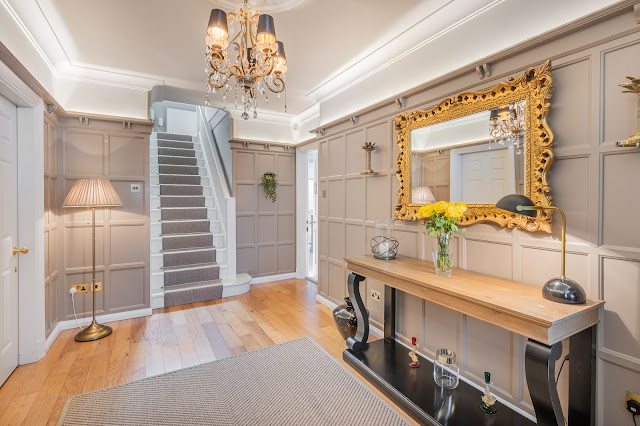
They say a picture speaks a thousand words, so ensure your agent photographs the best rooms from the best angles. The most important photograph is the front shot of your Southampton home, so always ask to see the photographs before your property goes live on to the market to make sure they show your property in the best light possible.

The second ‘first impression’ is when viewers view your home. Often the thing that lets the side down here is your carpets. If your carpets are more than 10 years old, then seriously consider replacing them with something inexpensive with some decent underlay or give them a good professional clean.

In this Facebook world, your Southampton home needs to look as good as it can to appeal to as many Southampton buyers as possible.


3.    Make it a potential home for your buyer, not a shrine to you

There was a house in the East Midlands called “Disaldu” (as in “This will Do”) that had been on the market for four years with six estate agents. As soon as it changed its name, it sold in a week. Be careful about over personalising your Southampton property as that could be off-putting to possible home buyers. 

Try not to be too daring with styles and colour schemes in your bathroom and kitchens, as your buyer won’t want to spend another £25,000 changing your neon pink kitchen units to something a bit more mainstream.

Southampton homebuyers often hate to change something which has just been finished but is not to their personal taste. Now I am not talking about magnolia everywhere as there is room for some flare, yet be aware it’s a fine balance between your personal tastes and making your home attractive and selling it in the largest mainstream market possible.

Finally in this section, is your Southampton home cluttered or untidy? Many people won’t be able to see past the jumbled house and overflowing bookcases. If you are unsure, drop me a message and I can pop round your Southampton home when I am passing for 5 minutes if you want an impartial opinion.


4.    Highlight the potential of your Southampton home – but not too much

If you were considering extending your Southampton home with a garden room, loft conversion or extension, then getting a local architect technician to draw you up some outline plans to demonstrate the development potential of your Southampton property could be worth spending a few hundred pounds on.

Yet at the same time, be careful not to extend to make your Southampton house more sellable. I have seen a handful of Southampton homes be over-developed (i.e. almost over extended), making the house too big for its plot. It’s all about balancing the house with the size of the plot. Again, if you are uncertain in any way, drop me a line and I can give you some impartial advice (even if you aren’t moving for another 12/18 months).


5.    Don’t let your garden grow on you

Since the lockdown began in spring 2020, our gardens have become one of our most cherished features. Southampton homes with decent sized gardens have attracted a premium. However,

over-fussy and poorly planned gardens can also be detrimental to the value of your Southampton home, rather than add value to it.


6.    Offices, offices, offices

Working from home could be here to stay for a few years. With this new age of home-working, even if you don’t work from home, maybe set up a study area. It might even be worth investing in one of those office pods for your garden.


7.    Make sure the price is right

The bottom line is, if a Southampton property isn’t selling it probably means the asking price is too high. Yes, even in a market such as this….


33.5% of Southampton properties have been on the market more than 3 months


Putting your Southampton home up for sale at too high an asking price is one of the most harmful things you can do as a seller. This approach regularly costs homeowners between 3% and 5% of their potential price agreed.

If you decrease your asking price at a later date in order to achieve a sale on your Southampton house, you probably won’t get what you might have done if it had been realistically priced from the beginning.

I am aware of a bay-fronted 4-bed detached property in Southampton which, in the summer just gone, began with an asking price of £735,000 yet ended up selling for only £645,000. It should have achieved £675,000 with a £684,500 initial asking price (even worse, they missed out on the property of their dreams because that one, being realistically priced, sold before they dropped their own price).

The sturdiest and most important property market response is always in the first couple of weeks of exposure. Many Southampton homeowners waste this optimum sales time by being too hopeful on their asking price.

If you are on the market in Southampton and believe you should reduce your asking price, be courageous with your reduction. Make one substantial change of at least 5%, not a series of salami price changes of a 1% here or 2% there.

So, if you are currently on the market and feel you aren’t getting anywhere and think it could be your asking price, then again, drop me a line at brian.linehan@belvoir.co.uk 

Tuesday, 4 January 2022

New year, new move


The new year encourages many of us to make positive changes in our lives. A popular choice is pledging to do more exercise, while some people might decide to learn a new skill. But if you were one of the many sellers who put their home on the market last year and you haven’t yet found a buyer, this new year you’re probably resolving to get that sale!

As estate agents, we find that pretty much every new year brings with it not only a flood of requests from homeowners for valuations, but also a steady stream of enquiries about homes for sale. That means as we make our way through winter towards the spring, the market is usually buzzing.

So, how can you best take advantage of this activity and make sure your home attracts and secures the perfect buyer?

Here’s our round up of five positive steps you can take right now to revamp your marketing strategy and ensure this is the year you move on and make a fresh start in a new home.


  1. Take a brief rest from the market

In our experience, a home tends to generate the greatest interest from buyers in the first two to three weeks that it’s on the market. When your home appears as a new listing, buyers who are registered with online portals should receive a link to the details, and your agent should be sending out the brochure to their own database of potential buyers.

But after that initial flurry of activity, things often settle down on the viewing front, and we find that the longer your home is on the market, the less likely it is to attract the perfect buyer. As those who have been looking for a new home for a while keep seeing your listing, the fact that it hasn’t sold yet may make it less desirable to them, and you’re more reliant on new buyers who are just starting their search.

So, if you’ve been advertising for several months, it could be a good idea to take a break just for a few weeks, in order to reignite interest. Give the market time to move on a little bit – let some sales of other homes that are comparable to yours go through and wait for new buyers to enter the mix – then you can relaunch your home with some fresh marketing.

And while you’re temporarily off the market, you can use the time to review your sales and marketing plan with your agent and take some positive actions, beginning with a review of what buyers who have already seen your home have said about it.


  1. Review feedback from viewings

Feedback from potential buyers who have viewed your home can often be incredibly useful. Finding out what they liked and what didn’t appeal so much helps both you and your agent understand what could be discouraging people from making an offer.

For instance, if viewers thought some rooms felt a little dark or smaller than they’d hoped, could you change the lighting or perhaps rearrange some of the furniture to maximise light and space? Or, if the feedback was that certain rooms felt dated or needed some work, would you be prepared to spend a little money on upgrades or redecoration, to help achieve the best possible price for your home?

So, discuss with your agent the feedback people have given so far, and if several buyers have highlighted the same points, look at whether there’s anything you can do to change those things and make your home more attractive to buyers. And feel free to contact us for some advice – we’re always here to help!


  1. Style your home for the spring

Some simple restyling can be a great, cost-effective way to give your home a new look for the new year, and you might be surprised what you can achieve with just a few accessory changes.

Pack away any dark-coloured or heavy cushions, throws and rugs – all the touches that helped make your home feel extra cosy through the winter – and replace them with lighter fabrics. Invest in some crisp white bed linen (which will also brighten up the bedrooms in your new home when you move!), and make sure curtains and blinds are well drawn back to let as much daylight in as possible. Breathe new life into each room with freshly cut flowers and leafy plants, and swap large pillar candles and storm lanterns for just a few more subtle, light floral-scented candles. You can also check out the latest issues of home magazines for more current style tips.

Finally, think about how the furniture is positioned – could a different configuration make a room feel more spacious and inviting to potential buyers? And don’t forget, you can always ask for some help with this. We know ourselves that it can be tricky to look at your own home objectively, so maybe ask a friend to cast their eye over it and give you an unbiased opinion.


  1. Ask your agent to take new, professional photographs

Professional photographs can make all the difference to the success of your home’s marketing. Great eye-catching photographs don’t only show what’s in a home, they tell a story and illustrate a lifestyle that really grabs the imagination of potential buyers, making them want to live that life themselves.

For example, a professional sitting room photograph might feature a roaring fire and some glossy magazines next to an afternoon tea on the table, conveying a sophisticated, yet warm and relaxing feel. And a bathroom shot might show a steaming bubble bath, surrounded by candles and soft lighting, to give the feeling of a luxurious spa.

A photographer who’s experienced in shooting homes for magazines and sales brochures will know exactly how to capture each room looking its absolute best – from the angle and lighting to incorporating the finest lifestyle features into the shots.

So, once you’ve revamped the styling of your home, ask your agent to have some new, professional photographs taken. Not only will that ensure your images look current and in line with the season, but if you’ve taken a break from marketing, it means you can relaunch with an entirely new portfolio of stunning shots and potentially attract buyers that might not have noticed your home before.


  1. Update your brochure

Take another look at the brochure your agent’s been sending out to prospective buyers. Are you happy with the quality, and do you feel it properly reflects the value of your home? It should showcase a desirable lifestyle that will grab buyers’ attention and entice them to view – does it do that?

Once you’ve had new photographs taken, your brochure will need updating anyway, so this is your opportunity to make any other changes that could help attract that perfect buyer. So make sure:

  • The front cover features a striking photograph of the exterior – we find a twilight shot with all the interior lights on often makes a stunning first impression
  • The order of the interior photos takes buyers on a logical journey through the home, as they might see it on a viewing
  • The written copy has an enthusiastic tone and is full of descriptive and emotive adjectives to capture the buyer’s imagination
  • There is a floorplan that includes room dimensions and the overall floor area and shows the orientation of your home.


Of course, depending on how your agent responds to your suggestions and how happy you are about your experience with them to date, you may feel it’s time for a complete change of approach with a new agent. In that case, take a look at our blog ‘Thinking of changing estate agents? – Our smooth move guide’ https://bit.ly/3JyR3Zs

And if you’re ready to step things up a gear so you can get moving this new year, we’d love to hear from you. Get in touch and we’ll be delighted to take you through our bespoke marketing approach and discuss how we can help you achieve a successful sale at the best possible price. Just call on 02380018222 or email brian.linehan@belvoir.co.uk and we’ll get right back to you.


Wednesday, 22 December 2021

What Will Happen to Southampton House Prices in 2022?


Traditionally, if you had not sold your Southampton home by the first week in November, you would normally have to wait for the house sellers to return in the famous Boxing Day rush on the portals (Rightmove, Zoopla etc) to get potential buyers interested.

Yet matters have been different this year as the various lockdowns have caused a surge in house buying right up until when the Christmas edition of the Radio Times goes on sale.

So, the question is, how will 2022 look regarding the Southampton property market?

The last couple of years in the Southampton property market have been different in many ways. So much so, many Southampton homeowners are presently deliberating whether they should put their Southampton home on the market in January or wait until later in the summer.

Speaking to many Southampton buyers and sellers, (and in fact Southampton buy-to-let landlords as well) in the last couple of weeks in the run-up to Christmas, many were asking the very same question.


What is going to happen to Southampton house prices in 2022?


Some people asking this question are Southampton buyers troubling themselves that they are about to buy their Southampton home just before a potential property crash, yet others are Southampton homeowners wanting to know where the top of the market is before they sell. Even a handful of Southampton landlords are unsure to either start buying or start selling some of their rental portfolio.

Therefore, let’s see what has happened in 2021 to make a better judgement of what should happen in 2022.

Nobody has a crystal ball that can tell what 2022 holds, however most property experts are not forecasting doom and gloom for the British property market.

Whilst the final numbers won’t be known until Easter 2022, it is estimated that in 2021 one in fifteen privately owned homes in the UK are expected to have changed hands, being the busiest year in the last 14 years. Locally,


3,833 properties have changed hands in the last year in Southampton


Although that is only up to October 2021, so numbers will be much higher once all the final counts are in by March/April.

The pandemic made many Southampton families re-evaluate what they wanted from their Southampton home, with many wanting bigger rooms (and more of them). Many in the press dubbed this ‘the race for space’, meaning the property market was flooded with home buyers, most bringing forward the home move they had planned between now and 2025.

The issue was, there weren’t enough Southampton properties on the market to satisfy every Southampton buyer, meaning Southampton house prices have unsurprisingly been driven up.


The average price of a home today in Southampton is £329,900


Although it is still premature to say what will happen in 2022, most property commentators seem assured that we are not heading towards a house price crash, mainly due to one reason.

There aren’t enough properties on the market in Southampton. Simply supply and demand economics!

The property crash in 2008 was caused by everyone dumping their property on the market.


In January 2007, there were 2,619 properties for sale in Southampton, one year later in January 2008, that had risen to 4,434 properties, whilst today, that stands at 930


And I can’t see that changing for 2022.

In 2007, mortgage interest rates were 6.5% to 7.5%, so when the economy started to falter, everyone looked to sell their homes to reduce their outgoings as unemployment rose by over 60% in just a couple of years. This time round most people have mortgage rates of around 2% to 2.5% and unemployment is dropping, meaning they don’t need to sell their Southampton home.

Now of course the stamp duty tax holiday came to an end months ago, and Bank of England base interest rates are expected to rise moderately in the coming year, yet not to the level they were in 2007 (5.75%).

Nonetheless, demand for Southampton homes will still be there. I have even read some reports suggesting that more than 20% of British households are seriously thinking of moving between now and the summer of 2023, and this will support Southampton house prices whilst demand continues to exceed supply.


Southampton house prices will be 1.9% higher by the end of 2022


Another reason why I believe that will be the case is the return to home working. If, as a country, we will need to work from home each winter for the foreseeable future because of new variants, then this will cement the need for people wanting to move home for remote working. 

It might be that Southampton buyers are looking for a dedicated office at home or that they feel they now no longer need to be in large built-up areas that are near to their work. 

This increase in Southampton house prices is expected to entice even more Southampton house sellers onto the market, which will steady Southampton house prices slightly (as supply increases), yet I still believe there won’t be enough properties coming onto the market to satisfy the colossal demand.


What about the Southampton rental market?


Rents tend to grow in line with tenants’ wages. So, with many people getting decent pay rises and not enough properties being built, many economists are suggesting rents will be 14% to 19% higher by 2027. Even with the house price growth, the numbers for rental investments still look rosy.


Is it the right time to buy your first property in Southampton?


This rise in Southampton house prices has had many people asking whether 2022 is the right time to buy their first home? Should they buy now before Southampton prices rocket even further or delay in the hope that house prices come back down? 

As with any important decision in life, this will mainly depend on your own personal life and your motives for wanting to move. 

If the Southampton home that you want to buy is on the market, available and you can afford the mortgage, then delaying could be detrimental. It’s like holding off for the ‘next generation TV’, it then coming out; then just as you are about to buy the TV, the next ‘next generation TV’ gets announced for six months’ time ... and the cycle is constantly in motion – so you end up never buying a TV … just like you will never buy your own home!


Buying property is a long-term game


Sometimes you just have to make your decision, get something bought and start the journey of the next 25 to 35 years of living in your family home whilst paying off your mortgage.

The present low interest rates for first-time buyers means that there are some very low mortgage deals available for those with a decent deposit, making it a good time to buy a Southampton property, especially if you fix the interest rate.

If your deposit is humbler, the Government’s 5% deposit mortgage guarantee scheme will still enable you to buy a property, albeit at a slightly higher interest rate.

Looking at the bigger picture, these are only my opinions. If inflation doesn’t get too out of hand and interest rates don’t go above 2% to 3%, it looks like Southampton house prices will, for 2022 and a few years beyond, continue upwards albeit with a slower trajectory than 2020/21 and probably with a few short, sharp up and down spikes on the way.

The bottom line is, ensure that any Southampton house move that you intend to make is something that you can afford, allow for future rises in interest rates and make plans for as many eventualities as possible. Do that, and you should be just fine.

These are my opinions – what are yours?


Monday, 20 December 2021

Southampton People’s Addiction to Their Spare Bedrooms?


The Housing Minister, Chris Pincher, has suggested older homeowners are “rattling around” in their homes as they are too big for them. He implied they are selfish and should sell up and move to a retirement home when he spoke to a committee in the House of Lords. He stated that many British homes are “under-occupied” and could be better used by younger families with children.

He went on to say that the Government will aim to persuade UK housebuilders to build more developments suitable for OAPs, freeing up space in their existing homes, which in turn would open up more homes for first and second-time buyers.

So why is this an issue?

The fundamental problem of the Southampton housing ‘crisis’, is the point that the supply of Southampton homes has not historically met demand, thus increasing property values (and in turn rents), consequently ensuring home ownership becomes an unattainable ambition for the twenty something’s of Southampton.

Call me a pragmatist, but it’s understandable that either demand needs to drop or supply needs to rise to stop this trend getting worse for the generations to come.

Don’t get me wrong, I admire Westminster’s plans to help first-time buyers with their ‘First Homes’ initiative to increase the supply of new homes being built just for first-time buyers. Yet it’s targeted to deliver only 1,500 homes in around 100 locations in the next two years.

To give you an idea of how this is a drop in the ocean, the Government sponsored the independent Barker Review of Housing Supply Report in 2004, which was tasked at looking at what could be done to level the playing field regarding the housing needs for the UK. The report found that the UK needed 240,000 homes to be built each year just to meet the demand of a growing and aging population. Since 2000, the average number of properties built in the UK each year has only been 177,975 per year. This means we have been around 62,000 homes short per year. Therefore, after 20 years of this annual shortfall we, as a country, have 1,240,500 too few homes – hence the massive uplift in house prices over the last two decades.


Therefore, one option that could resolve the housing crisis is if the Government literally looked closer to home, concentrating on matching households with the appropriately sized home … and this is what the government have shone a light on … people with too many spare bedrooms.

Is having a spare bedroom something that in this day and age is particularly wasteful? Well, let’s look at the numbers for Southampton.


33,300 Southampton homes have one spare bedroom.

Well, everyone in my opinion needs a spare bedroom, especially in the light of lockdown where many of us needed to work from home.

Ok, let’s see who has two or more spare bedrooms.


Of the 105,350 households in Southampton 27,287

have two or more spare bedrooms!

Of all the homes in Southampton, be they owned, privately rented or council house, 25.9% of Southampton homes have two or more spare bedrooms, compared to the national average 45.2%.

Breaking it down by ownership/tenure -

Of the 55,622 owned houses in Southampton, 22,116 have two or more spare bedrooms or as expressed as a percentage,


39.8% of Southampton owned homes have 2 or more spare bedrooms (compared to the national average of 53.9%).

Of the 23,373 council houses in Southampton, 2,017 have two or more spare bedrooms, or as expressed as a percentage,


8.6% of Southampton council homes have 2 or more spare bedrooms (compared to the national average of 11.6%).

Of the 26,355 private rented houses in Southampton, 3,154 have two or more spare bedrooms or as expressed as a percentage,


12% of Southampton private rented homes have 2 or more spare bedrooms (compared to the national average of 19.4%).

You can see there is the spare capacity in the Southampton housing market.

The Government hit the social housing sector with their ‘Bedroom tax’ in 2012, (also known as under occupancy charge or spare room subsidy) which meant that in council homes you would receive less in Housing Benefit or Housing Costs Element in a Universal Credit claim if you lived in a housing association or council property and were deemed to have one or more spare bedrooms.

Now it seems the Government have concentrated on the group that makes up the bulk of homeowners with spare bedrooms, the older owner occupiers of large properties, in their 60’s and 70’s, where the kids have flown the nest.

However, there are many explanations why these mature homeowners do not downsize. These people have lived in the same house for 30, 40 even 50 years, and as one matures in life, many people do not want to depart from what they see as the family home. Much time has been invested in making friends in their neighbourhood and it’s nice to have all those rooms in case every grandchild decided to visit, at the same time, and they brought their friends!

But is that a selfish point of view? Are we addicted to our spare bedrooms?


Or should the Government keep its nose out of where people live?

I would ask if the ‘Minister of Superfluously Sizeable Houses’ should be kicking you out of the Southampton home you worked for and have spent much of your life in? And why is it assumed that retired homeowners want to downsize to small little bungalows and apartments? Many love their spacious living rooms and kitchens (which are typically found in bigger houses).


This Government is in a muddle about housing policy.

On one side of the coin, the Government announced an increase in the tax burden on the British public with a rise to its highest level since the early 1950’s to pay for care and the NHS, yet on the other side of the coin, recently cancelling vote losing policies, so that mature people going into care do not need to sell their homes (which, if you think about it, they won’t live in anyway because they are going to long-term care). Whilst at the same time, to muddy the waters, they are suggesting to mature homeowners they have to move out of those same large homes to free it up for younger families?  If the Government don’t know what the answer is, who does?


The subject of downsizing is a delicate one to unravel.

We all know mature homeowners and know that if they moved to a smaller Southampton home they would lose all the space they take for granted and would be unable to have the grandchildren over. Remaining in your large Southampton home is not greedy, it’s just the accepted human longing to enjoy a life after 50 plus years of working and paying your dues and taxes. You could say move to a managed retirement home? Yet many are very small and quite expensive.

I have spoken in previous articles in my blog on the Southampton property market that there aren’t enough bungalows being built either. And anyway, why should you have to relocate and wave goodbye to all your neighbours who have become friends and provide a support network?

There is a case made by some that mature downsizers could be given stamp duty tax breaks to get them to downsize, yet I am not sure how this could be policed, and it doesn’t solve the problem of increasing the overall supply of property in the UK.


The real issue isn’t spare bedrooms, it’s the need to change the planning rules to increase the number and type of new homes being built that will satisfy these mature homeowners with excess spare bedrooms to move into.

Big national builders have exploited ham-fisted planning rules since the 1980s, but no political party seems to have the answer. Housing Minister Chris Pincher might say he wants to persuade builders to build more suitable homes for mature people, yet his Government’s actions don’t seem to match his words.

In the Queen’s Speech this spring, the Government announced a proposed new planning system, which would create “simpler, faster procedures for producing local development plans, approving major schemes, assessing environmental impacts and negotiating affordable housing and infrastructure contributions”, or in layman’s terms, allowing more building to take place.

However, word coming out of Government is those plans could be cancelled following the Conservatives’ surprise defeat in the Chesham & Amersham by-election to the Liberal Democrats in the summer, which was blamed by some Conservative MPs on the new proposed planning laws.

So, whilst the Government decide what to do, what can mature Southampton homeowners do if they feel they do want to downsize?


The biggest fear many mature Southampton homeowners have is they will sell their large Southampton home but be unable to find anything to buy – thus making themselves homeless.

In this current Southampton housing market, the issue isn’t selling your Southampton home, but ensuring you find the right home to move into. Feel free to drop me a line to discuss how we can potentially sell your own Southampton property, tell the buyer to wait, then we will go and find a home for you to move into in your chosen area of Southampton.

Of course, all this takes time and patience, yet this is what old school estate agents did before the internet and the property portals. There is no extra charge for this and even if we find you a buyer, and for whatever reason the move doesn’t go ahead, there will be no charge.

If you are a Southampton homeowner or Southampton landlord and think this may affect you - feel free to drop me a line.

In the meantime, what are your thoughts about excess ‘spare bedrooms’? Let me know in the comments.

Wednesday, 8 December 2021

Should Southampton Landlords be worried about these new rental regulations?


Everyone should be doing their bit to help reduce the UK’s carbon footprint on the globe – yet the question is, is that burden being put too much on the shoulders of Southampton landlords with potential bills of £7,600+ in the next four years?

The background - the UK has obligated itself to a legally binding target to be carbon neutral by 2050. One of the biggest producers of greenhouse gasses is residential homes.

To hit that carbon-neutral target (as one-fifth of the UK's carbon output comes from residential property), every UK home will need to achieve a minimum grade of ‘C’ on their Energy Performance Certificate (EPC) by 2035. Each EPC has a rating between ‘A’ and ‘G’ - 'A' being the best energy rating and 'G' the worst – like an energy rating on a fridge or washing machine.

All UK rental properties are required to have an EPC. Yet, from April 2020, the Minimum Energy Efficiency Standards (MEES) regulations have required all private rental properties (including rental renewals) to have a minimum EPC rating of ‘E’ or above.

Yet new legislation being discussed by the Government’s Climate Change Committee has suggested that landlords should play their part and increase the energy efficiency of their private rented homes. Sounds fair until you dive into the details.

The Government is muting the idea that all new tenancies (i.e. when a new tenant moves in) in private rented properties should be at an EPC rating of 'C' or above by 2025 (and all existing tenancies by 2028). The issue is …

57.33% of all private rented properties in Southampton have an EPC rating of ‘D’ or below.


The problem is some Southampton landlords will find it very expensive, neigh impossible, to improve the energy efficiency of their Southampton rented properties, especially those Southampton landlords who hold older housing stock such as terraced properties built in the 1800s. These Victorian terraced houses never perform well on EPC ratings as they have solid walls. 

Now, of course, you can improve the EPC rating of a terraced house by improving roof insulation, boiler replacement, solar heating, and high-grade uPVC windows. Yet, with some terraced houses, there will come the point where you will be unable to get to the haloed 'C' rating without installing external or internal wall insulation, sometimes even floor insulation.

With wall insulation costing between £5k and £15k and floor insulation around £5k …


the bill to improve all Southampton’s private rented properties will be a minimum of £108,044,880.


But before I talk about what the options are for Southampton landlords, here’s the weird part of EPC’s. An EPC rating is calculated on the cost of running a property and not the carbon output or energy efficiency, despite its name.

My advice to Southampton landlords - although it’s correct to create a future strategy, all I can say at this point is 'more haste less speed'. These rule changes are only a discussion paper, and it remains open for consultation by any member of the British public until 30th December 2021. That means the Government's strategies and tactics may change.


Given that 57% of private rented properties are below a ‘C’ EPC grade, it is hard to believe the Government could achieve this without making big cash grants available.


 For example, there is presently a cap of £3,500 for energy improvements that Southampton landlords have to spend to get it to the existing EPC ‘E’ target grade on private rented homes (i.e. if you have a privately rented home at an 'F' or 'G' EPC rating, you only need to spend a maximum of £3,500 as a landlord on improving your EPC rating and still being legal even if those £3,500 don't get you to the current 'E' rating minimum). So, if the current rules allow an exemption to the EPC renting rules, if a Southampton landlord can’t improve their Southampton property enough, conceivably, could this be extended?

So, what are Southampton landlord’s options?

One thing you could do is put your head in the sand and hope it all goes away!

Another thing some savvy Southampton landlords do (be they my client, clients of other letting agents in Southampton or even self-managing landlords) is to sit down and plan a strategy for their Southampton rental portfolio. I print off all the EPC’s of their rental portfolio, look at the recommendations, then discuss a plan to ensure they are covered whatever the Government decides to make the new EPC rules. Like all things in life, plan for the worse and hope for the best.

If your agent isn't offering that service, please drop me a line because I would hate for you to miss out on the advice and opinion that so many Southampton landlords have already had from me. The choice is yours.


Monday, 6 December 2021

Southampton House Prices - The Effect of Rising Inflation


House prices tend to rise with inflation, so with the UK annual inflation hitting 4.2% last week, that’s good news, isn’t it? Yes and no – let me explain what it means for Southampton homeowners.

The year-on-year cost of living rose by 4.2% in October, its highest rate in almost a decade. The jump in prices (inflation), pushed mainly by increasing fuel and energy costs, places further pressure on Southampton household budgets.

So, what will this rise in inflation mean to Southampton house prices?

Let me look at the downsides first. The first is the effect inflation has on the true spending power or value of your hard-earned money.

The mid-1970s to mid-1980s was a time of high inflation in the UK, so I think that is an excellent place to start.


The average house in Southampton in 1974 was worth £14,306,

and by 1984 it had risen to £44,664


So, Southampton property prices had risen by 212.2% in the decade 1974 to 1984. Good news for everyone, then?  Well, as always, the devil is in the detail.


Inflation over the same decade rose by 224.2%, meaning your Southampton house was worthless in real terms (i.e. spending power terms).


If that same Southampton home had gone up by the inflation rate seen between 1974 and 1984, the house would have been worth £46,387 in 1984


That doesn't sound a lot (the difference between £44,664 and £46,387), until you apply that difference to today’s prices; that's a loss of £12,322 in today’s money.

The second is the effect of interest rates.

When inflation rises, the usual weapon of choice to reduce inflation is to increase interest rates. Homebuyers tend not to borrow as much on their mortgage when borrowing money becomes more expensive due to higher interest rates.

When interest rates get high (they were over 15% in 1992) Southampton homebuyers may not even want to borrow any money at all (staying put in their existing home). This would mean fewer Southampton home buyers wanting to buy (decreased demand). However, at the same time, more Southampton houses would be coming onto the market (because existing Southampton homeowners would want to sell and downsize because they have high mortgage payments), meaning higher supply … low demand and high supply does drive house prices in a downward direction.


So, does that mean you should hold off buying a Southampton home?


Although Southampton house prices did not keep up fully with inflation in the late 1970s and early 1980s, they did a pretty good job (and much better than keeping money in a savings account). You must remember your house is not a pure investment, it's a place you and your family live in. It's a place you call home. So don't worry if it doesn't keep up with inflation in the medium term as your four walls offer a lot more than just a simple investment.

Ok, so let’s look at what does happen when inflation effects property.

When your Southampton house price rises because of inflation, it increases the value of your house, not by the cost/value of your deposit. So, if inflation increases the value of your Southampton home by, say half (50%), it may triple, quadruple, or even quintuple the value of your deposit/equity.

For example, if you buy a Southampton property for £500,000 with a £50,000 deposit and inflation increases the price/value by 50% to £750,000, that means your equity in the property quintuples from £50,000 to £300,000. It also means you go from (in this scenario) owning 10% equity (£50k of £500k) in your home to 40% after inflation (£300k of £750k).

Even better if you take out a fixed-rate mortgage because you would be making a fixed monthly mortgage payment that dropped in real spending power ‘inflation adjusted’ pounds over the time of the fixed rate. You might ask why? Well, you are paying less for the mortgage than you did when you took it out (i.e. inflation erodes the actual value of money, meaning your mortgage debt diminishes in real value terms in line with inflation).

So, holding off moving home could cost you a lot of money.


What does this all mean for existing Southampton homeowners?


It’s challenging to forecast with any certainty what will happen with UK inflation and interest rates. I believe we will see inflation hover between 3% and 5% in 2022, with it returning to more normal levels of around 2% in 2023 (although I am no economist!).

We know the Bank of England base rate is just 0.1%, meaning it’s unlikely to get any lower.  I have spoken about this in previous articles on the Southampton property market and said the money markets have already priced in an interest rate rise to 0.75% to 1% by the summer of 2022.

So, if you haven’t already, you need to seriously consider taking advantage of these low mortgage rates (can you believe 21% of Southampton homeowners aren’t on a fixed-rate mortgage). The bottom line is, irrespective of what is happening to inflation and Southampton house prices, being able to afford the monthly payments on your Southampton home is what counts for everyone.

Next, if you are worried about the spending power of the equity tied up in your Southampton home, you will have built up a decent buffer if you have been in your house, for example…


The average value of a Southampton house has risen by 17.5% in the last five years, yet inflation has only been 11.3%

This means the equity in ‘real spending power terms’ has increased by 6.2% in the last five years.

One final thought for any Southampton homeowners thinking of selling and not buying another home, inflation could eat into the real spending power terms of your equity in your Southampton home – so now might be the best time to sell your home to get maximum bang for your bucks. Then invest the money in other pure investments that consistently tend to beat inflation, such as gold, commodities, or Real Estate Investment Trusts? Again, I am giving you my opinion here, not financial advice. You must take independent advice from someone qualified in these matters and make your own decisions.


If you would like a chat about anything in this article, do drop me a line.